Why Dice-Only Coldcard Seeds Were Unaffected by the RNG Bug
The Coldcard incident, briefly
On July 30, 2026, an independent investigation by Block disclosed that affected Coldcard firmware could use predictable randomness when generating seeds on the device. The defect had entered released firmware in March 2021. Attackers were able to derive keys and steal bitcoin from affected wallets.
| Date | What happened |
|---|---|
| March 17, 2021 | Version 4.0.0 shipped the faulty RNG path used by normal device-generated seeds. |
| 2022–2026 | The affected path shipped on the MK4 and later the Q. The dedicated dice-only path continued to derive its entropy from the entered rolls instead. |
| July 30, 2026 | Block published its independent analysis while the vulnerability was being actively exploited. |
| July 31, 2026 | Fixed standard firmware was released for the Q (1.5.0Q) and MK4/MK5 (5.6.0). |
Block’s report explains the defect and the affected firmware in detail. Here I focus only on whether the dedicated dice-only flow shared that weakness.
What this article sets out to prove
This article addresses one practical question for existing users: if you created a 24-word Coldcard seed through the dedicated dice-only flow using at least 99 fair, independent, private rolls, did this RNG bug weaken it?
The answer is no. In the dedicated dice-only flow, the entered rolls—not Coldcard’s faulty random-number generator—provided the seed entropy. That was true throughout all of the affected pre-hotfix firmware releases.
To demonstrate this independently, I first calculate the expected words with Ian Coleman’s open-source BIP39 tool. I then enter the same rolls on a SeedSigner and on two Coldcards running affected firmware, before checking the historical Coldcard source to explain why all four results agree.
I tested a Coldcard Q running 1.4.1Q and a Coldcard MK4 running 5.4.5. I deliberately have not installed the RNG hotfixes on either device. This tests the dice-only path as it actually behaved while the bug was present.
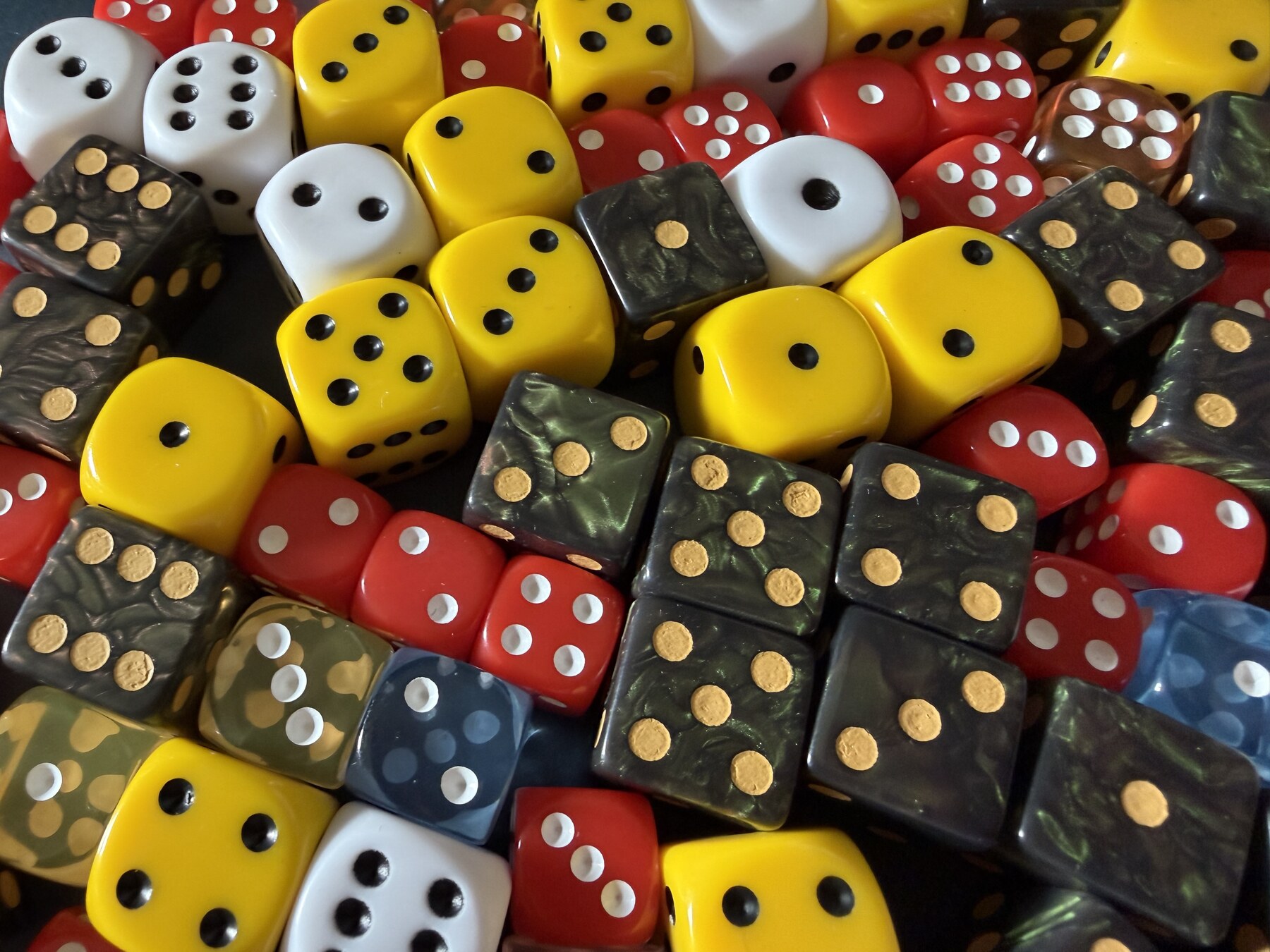
The reassurance in this article is specific to that dedicated 99-roll, 24-word dice-only process.
First, establish the expected words with Ian Coleman
I began with one public sequence of 99 dice rolls. I generated it using RANDOM.ORG’s Dice Roller, which is acceptable here only because this seed is intentionally public test data. For a real wallet, use a physical die in private; never obtain real seed entropy from an online service.
These are the 99 rolls, in order and without spaces:
133363436436436415622614221225242212144161454643266122155666664444633643543353132626522332412313253
I cloned and served version 0.5.6 of the open-source tool behind iancoleman.io/bip39 locally. To reproduce the result:
- Open Show entropy details.
- Paste the 99 rolls into Entropy.
- Select Base 10 [0-9] or Hex [0-9A-F].
- Select 24 Words.
The expected mnemonic is:
| Words 1–8 | Words 9–16 | Words 17–24 |
|---|---|---|
| 1. wrist | 9. average | 17. chronic |
| 2. tired | 10. crawl | 18. ordinary |
| 3. novel | 11. task | 19. chase |
| 4. fetch | 12. helmet | 20. typical |
| 5. woman | 13. negative | 21. recipe |
| 6. whisper | 14. wrong | 22. sunset |
| 7. jealous | 15. foster | 23. draw |
| 8. black | 16. dry | 24. victory |
Why not select Dice [1-6]? Ian Coleman’s Dice mode first converts every 6 to 0, while Coldcard and SeedSigner hash the entered characters exactly as written. Dice mode therefore calculates a different, internally valid seed from a different representation. Base 10 and Hex leave this particular input unchanged, so they match the devices being tested.
For real seed material, obtain and verify the tool in advance and run it on an offline system such as Tails. Never paste a real seed or its dice rolls into the online website.
Then compare the physical devices
I entered the exact same 99 characters on three physical devices:
| Device | Setup | Result |
|---|---|---|
| Coldcard Q | Firmware 1.4.1Q; deliberately not updated with the hotfix |
Same 24 words |
| Coldcard MK4 | Firmware 5.4.5; deliberately not updated with the hotfix |
Same 24 words |
| SeedSigner | Version 0.8.7 on a Raspberry Pi Zero v1.3 |
Same 24 words |
The Coldcards were running affected, pre-hotfix firmware. SeedSigner provides an independent implementation with no Coldcard code in common. All three produced the Ian Coleman reference result, word for word. Photographs of every word appear below.
Everything in this test is public data. Never send bitcoin to this seed. A photograph of a real seed is a complete compromise. Keep real rolls, words, hashes, photographs, and terminal history secret.
Why dice-only seeds were safe
The historical firmware makes the key distinction clear. Normal seed generation called the faulty device RNG. The dedicated dice-only flow from the affected 2021 firmware instead started empty and built the seed entropy solely by hashing each entered dice value.
99 dice rolls → SHA-256 → 24 BIP39 words
There was no device-generated randomness to weaken because the faulty RNG was never called. The same dice-only construction appears in the first MK4 firmware from 2022, MK4 5.4.5, and Q 1.4.1Q.
That source history covers the vulnerable period, while the physical tests show the result on affected firmware. Together they support the conclusion: a 24-word seed made through the dedicated dice-only flow with at least 99 fair, private, correctly entered rolls was not weakened by this RNG bug.
This conclusion does not cover the separate Add Dice Rolls workflow, which begins with a device-generated seed. It applies only to the dedicated dice-only generation/import flow.
Physical-device evidence
Coldcard Q 1.4.1Q
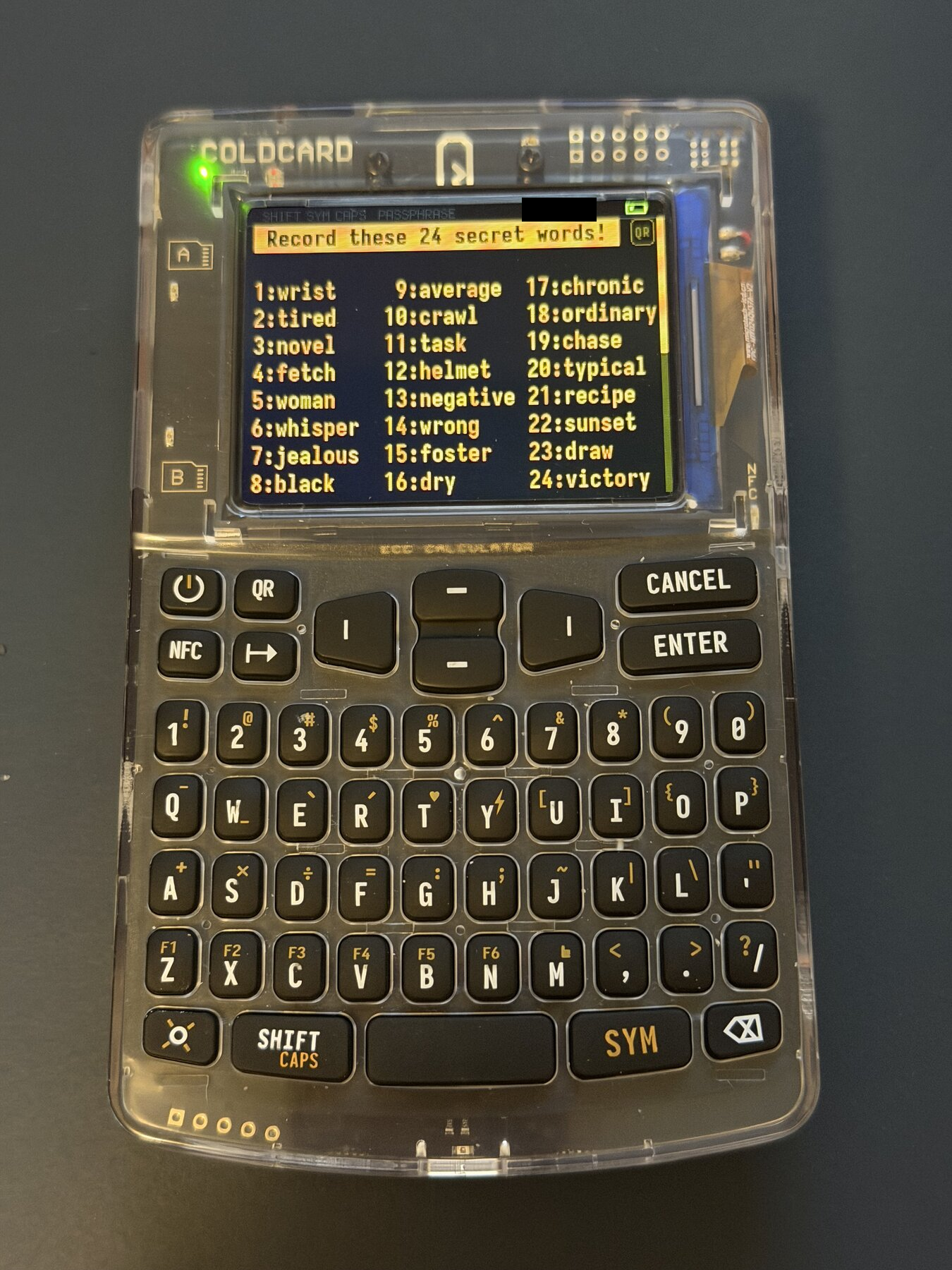
The Q displayed all 24 expected words on one screen while still running the affected 1.4.1Q firmware:
Coldcard MK4 5.4.5
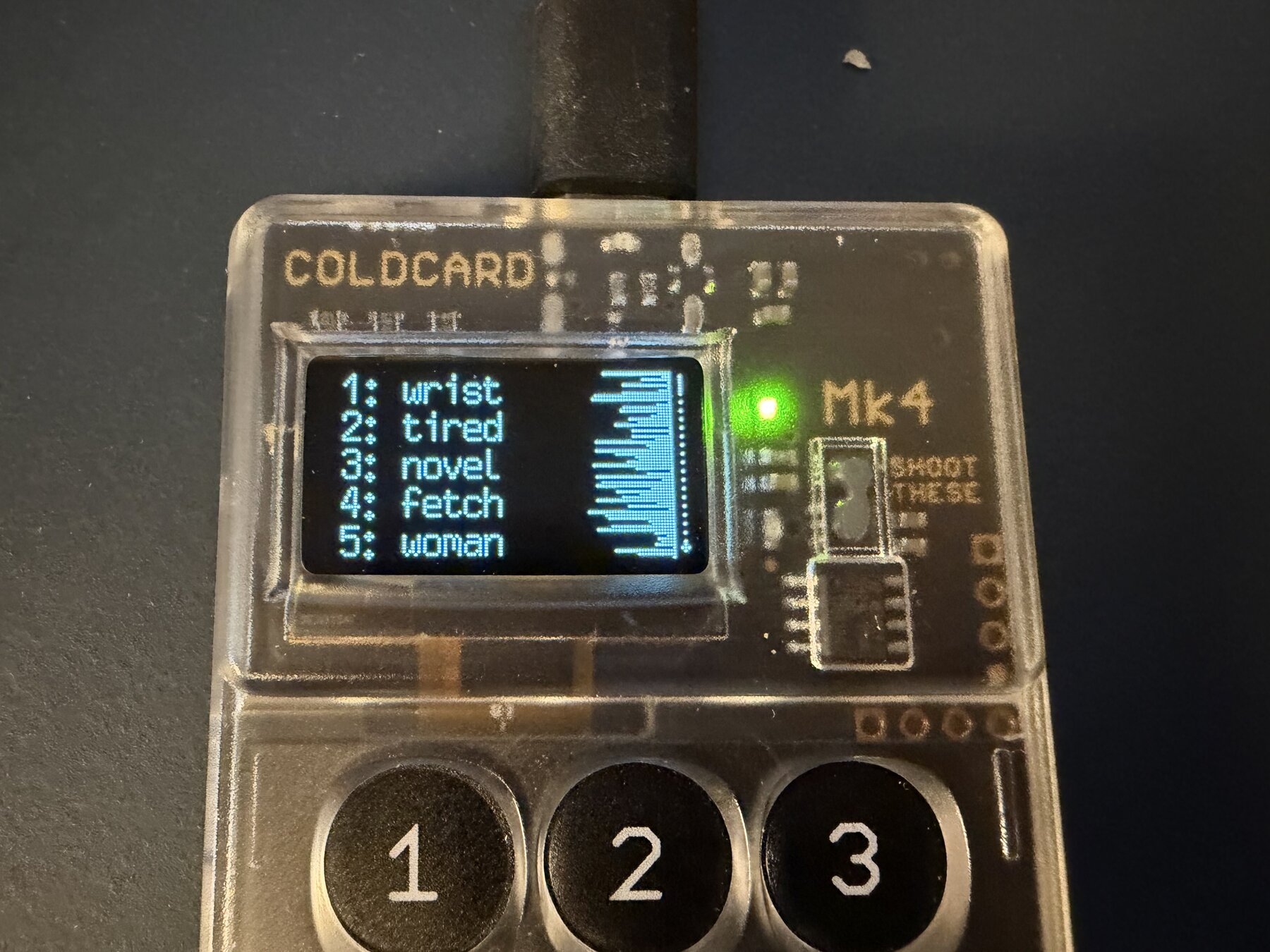
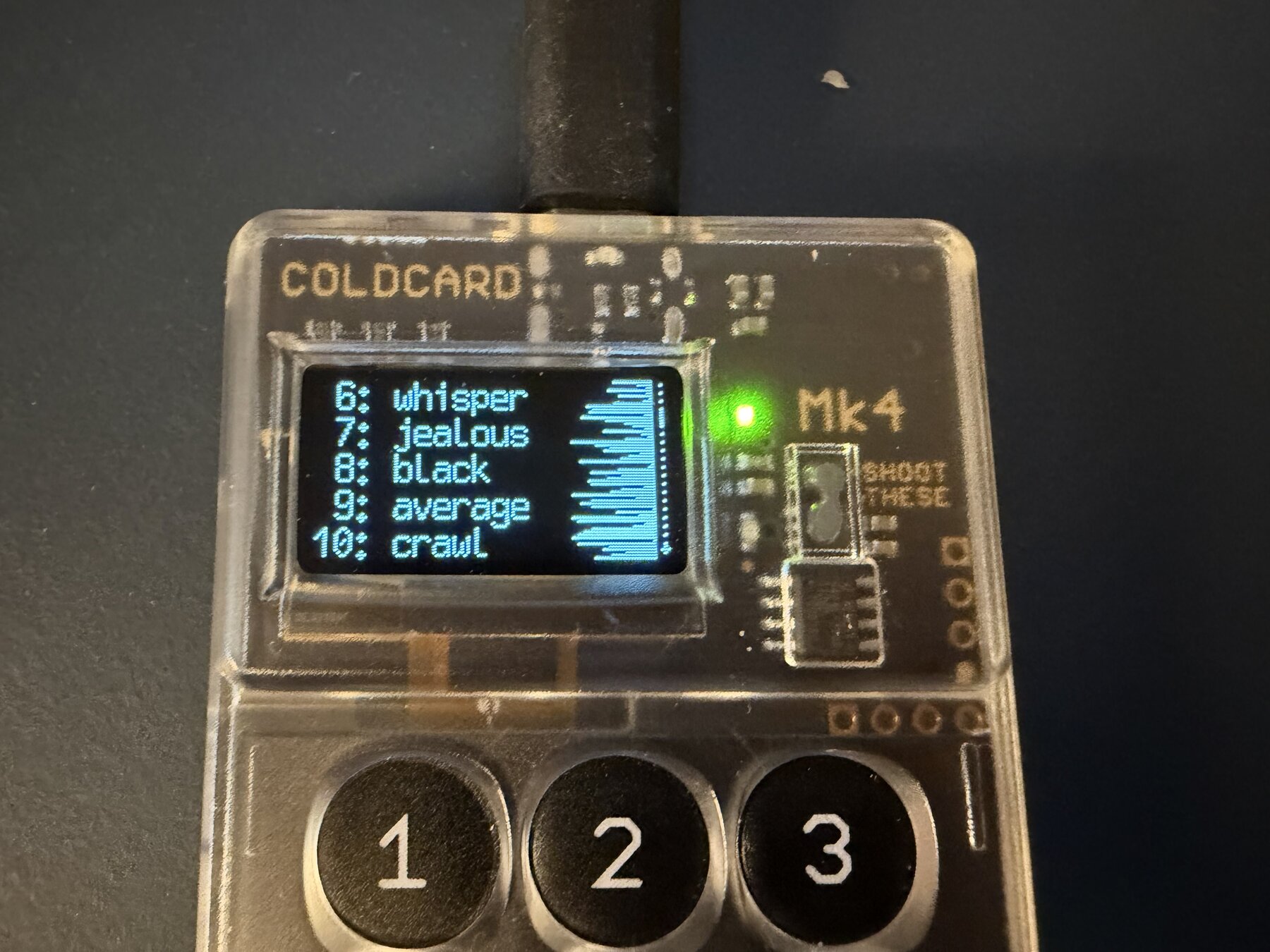
The MK4, also intentionally left on affected firmware, showed the same mnemonic in five scrolling positions:
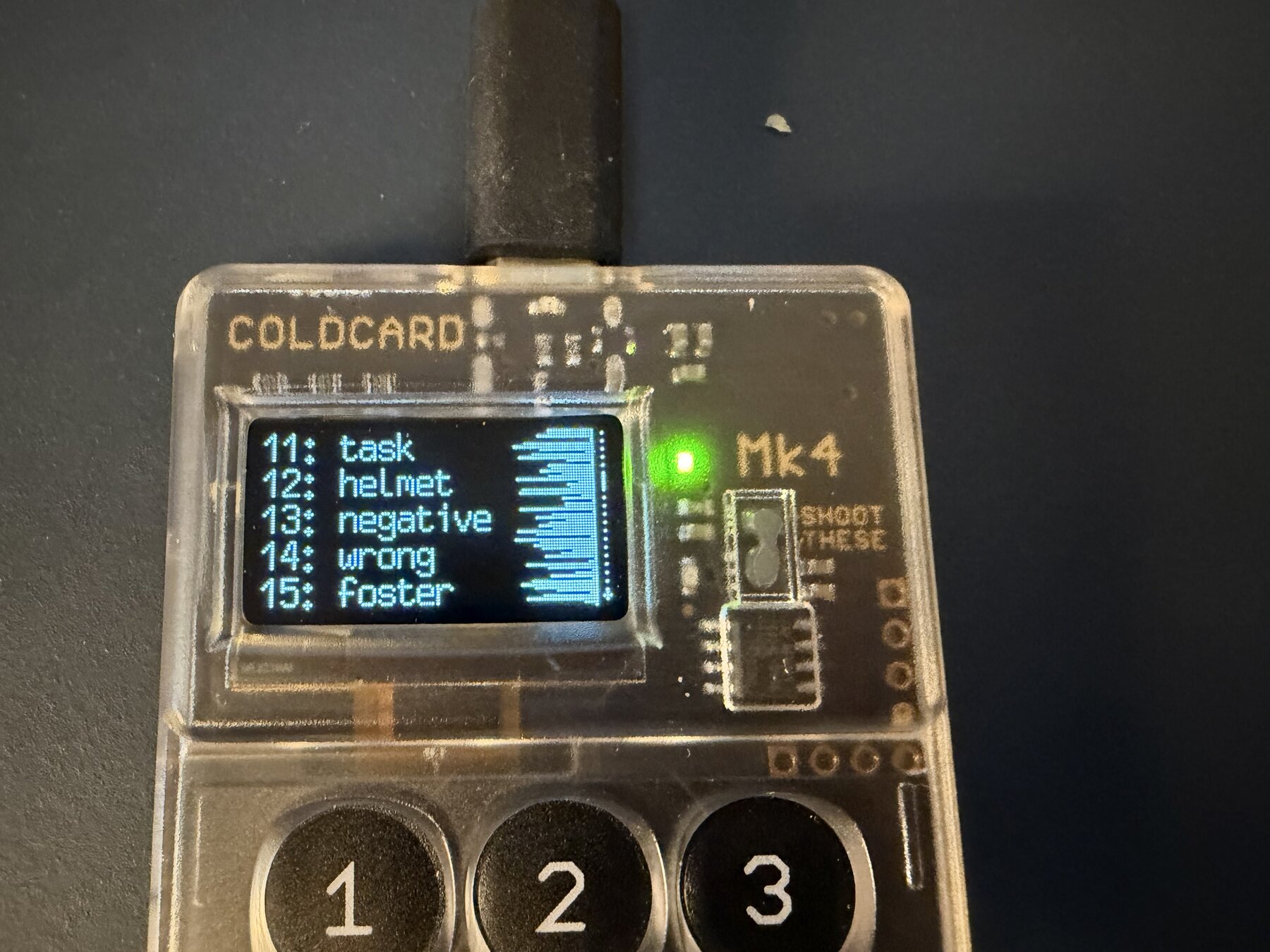
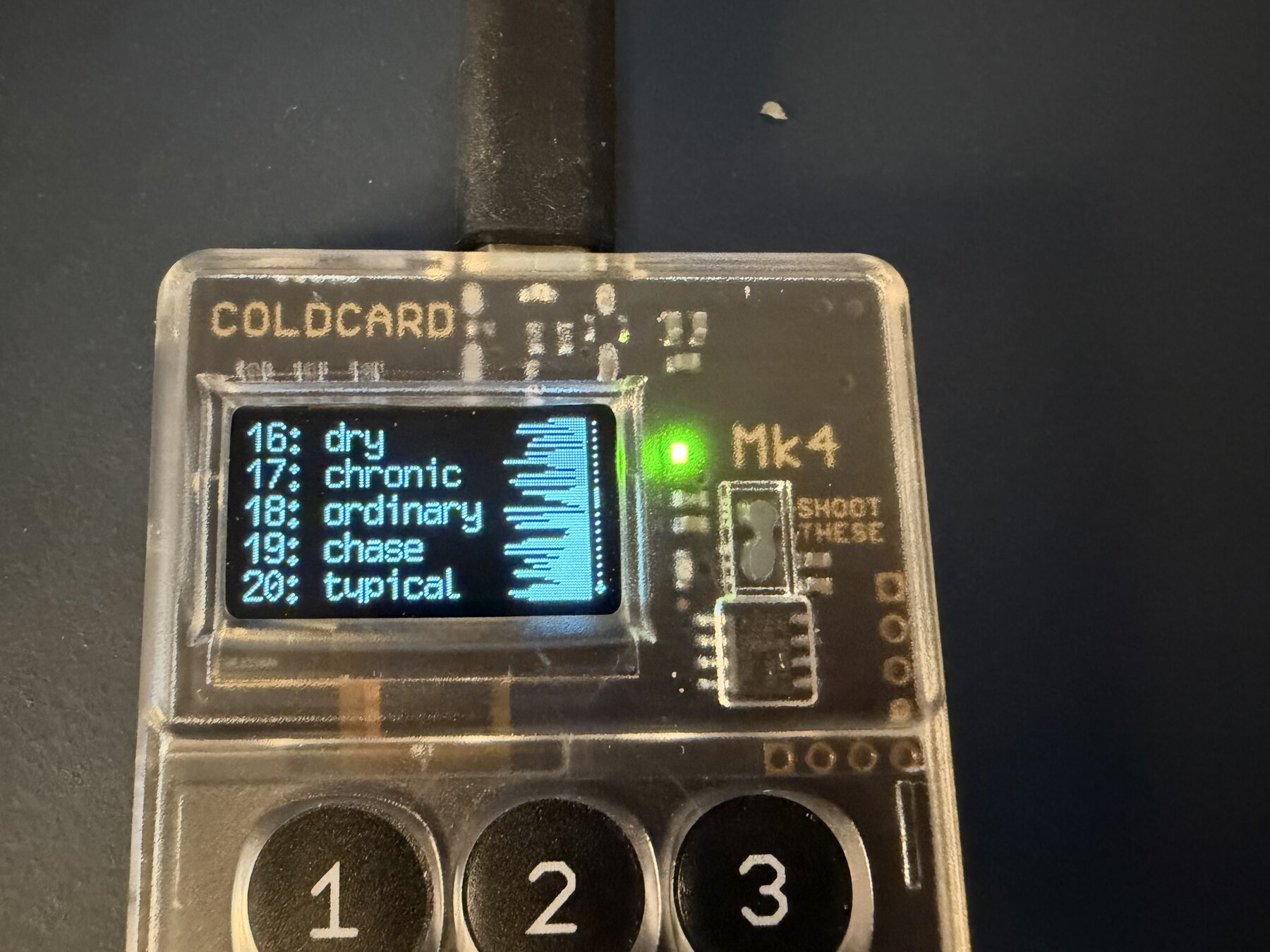
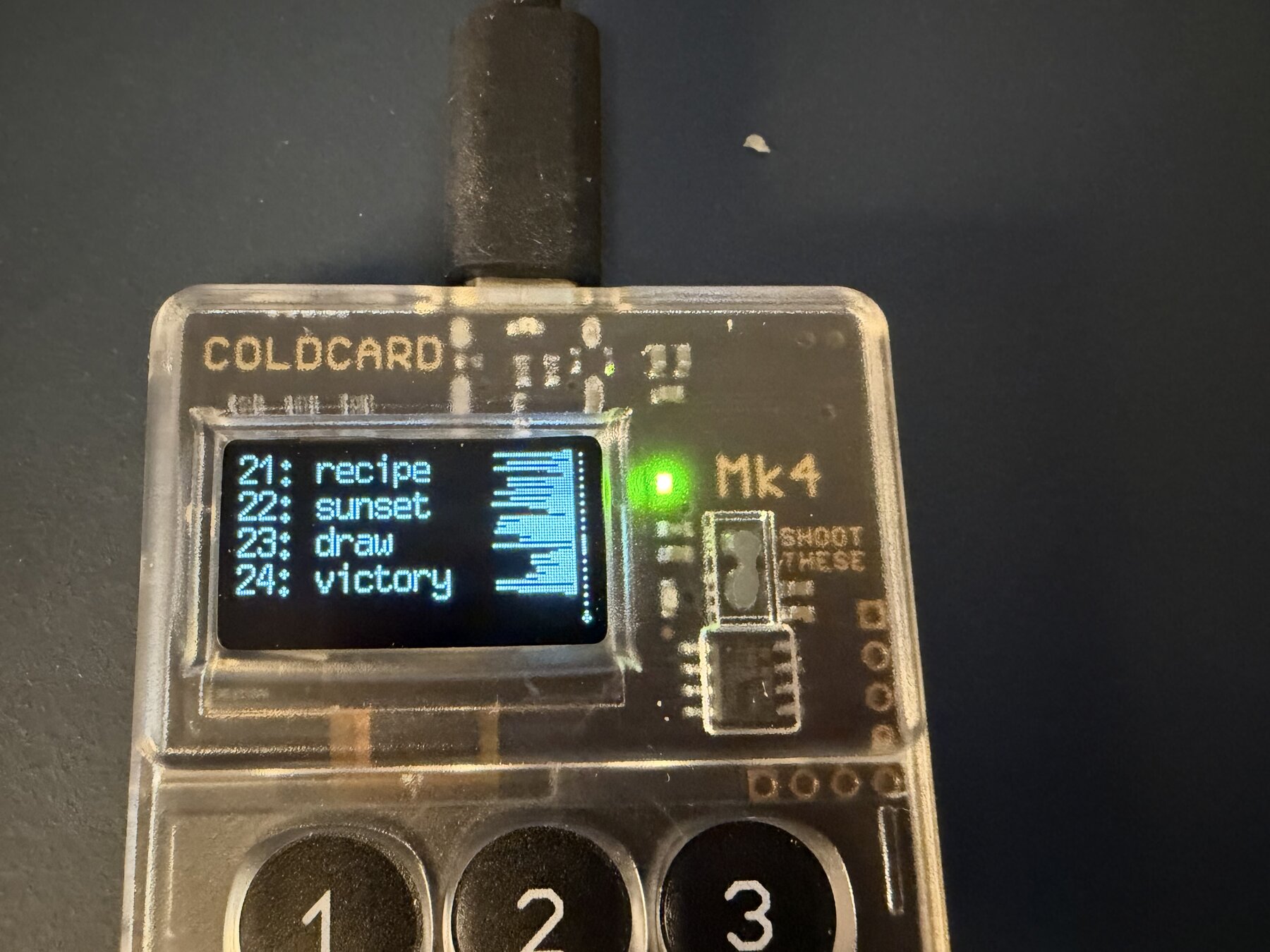
Coldcard also includes a small project verifier in its firmware repository. It is useful for checking that I understood the firmware, but it is not independent evidence because it comes from the same project. I ran:
printf '%s\n' '133363436436436415622614221225242212144161454643266122155666664444633643543353132626522332412313253' | python3 docs/rolls.py
It returned the expected SHA-256 digest and all 24 words.
SeedSigner 0.8.7 on Raspberry Pi Zero v1.3
SeedSigner provides an independent implementation and has no Coldcard code in common. I entered the same rolls on version 0.8.7 running on a Raspberry Pi Zero v1.3. It displayed the expected words over six screens.
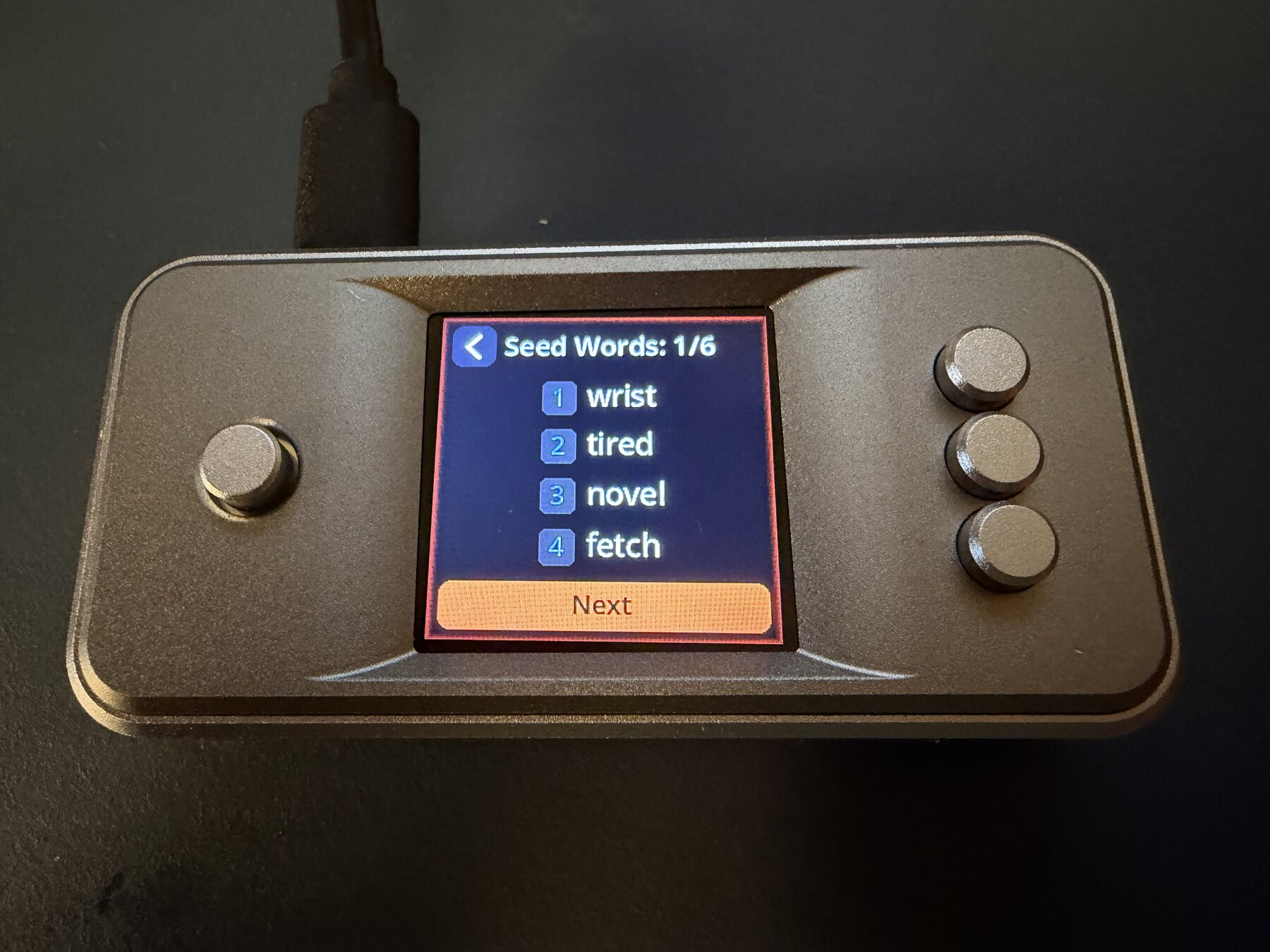
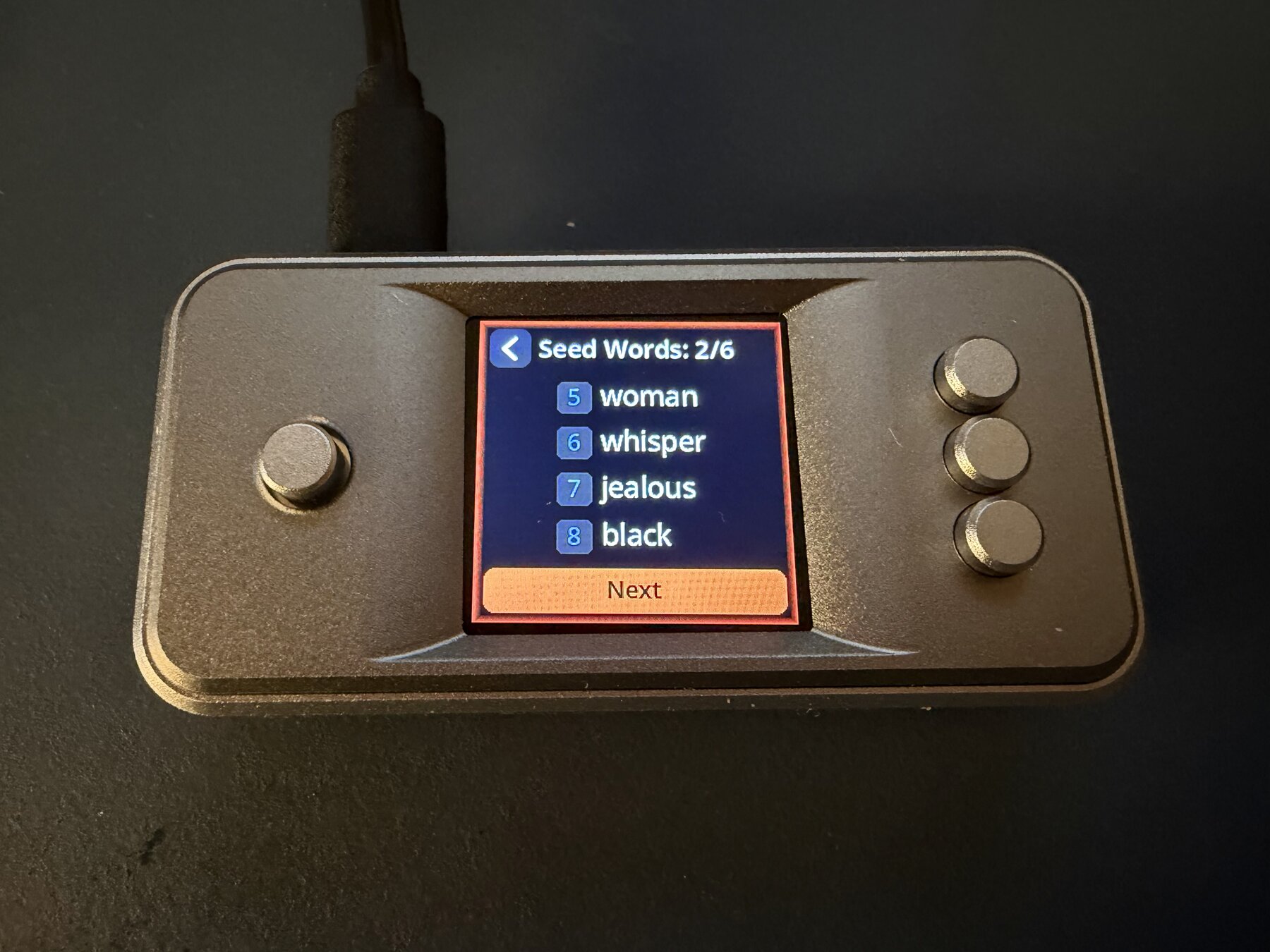
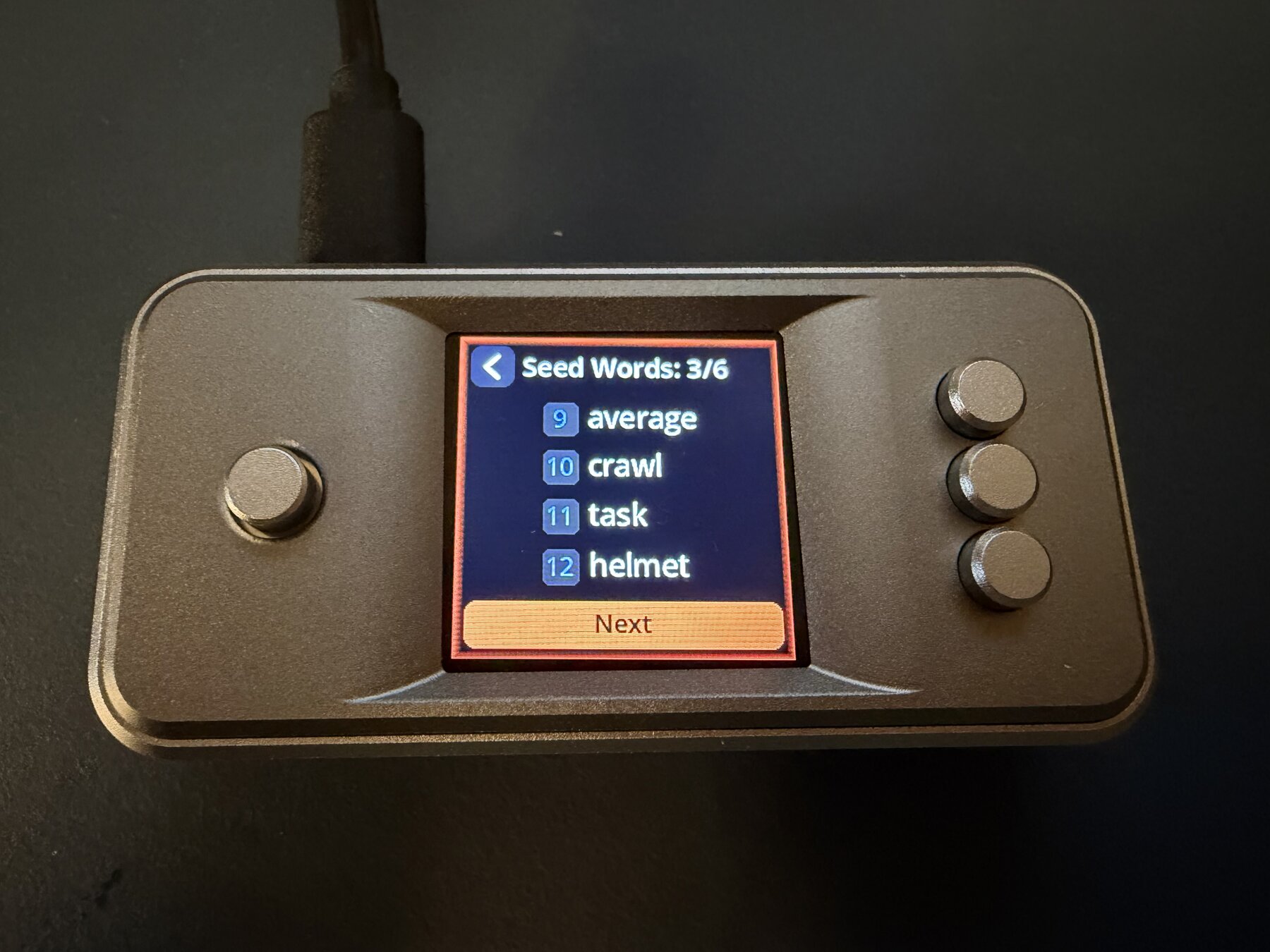
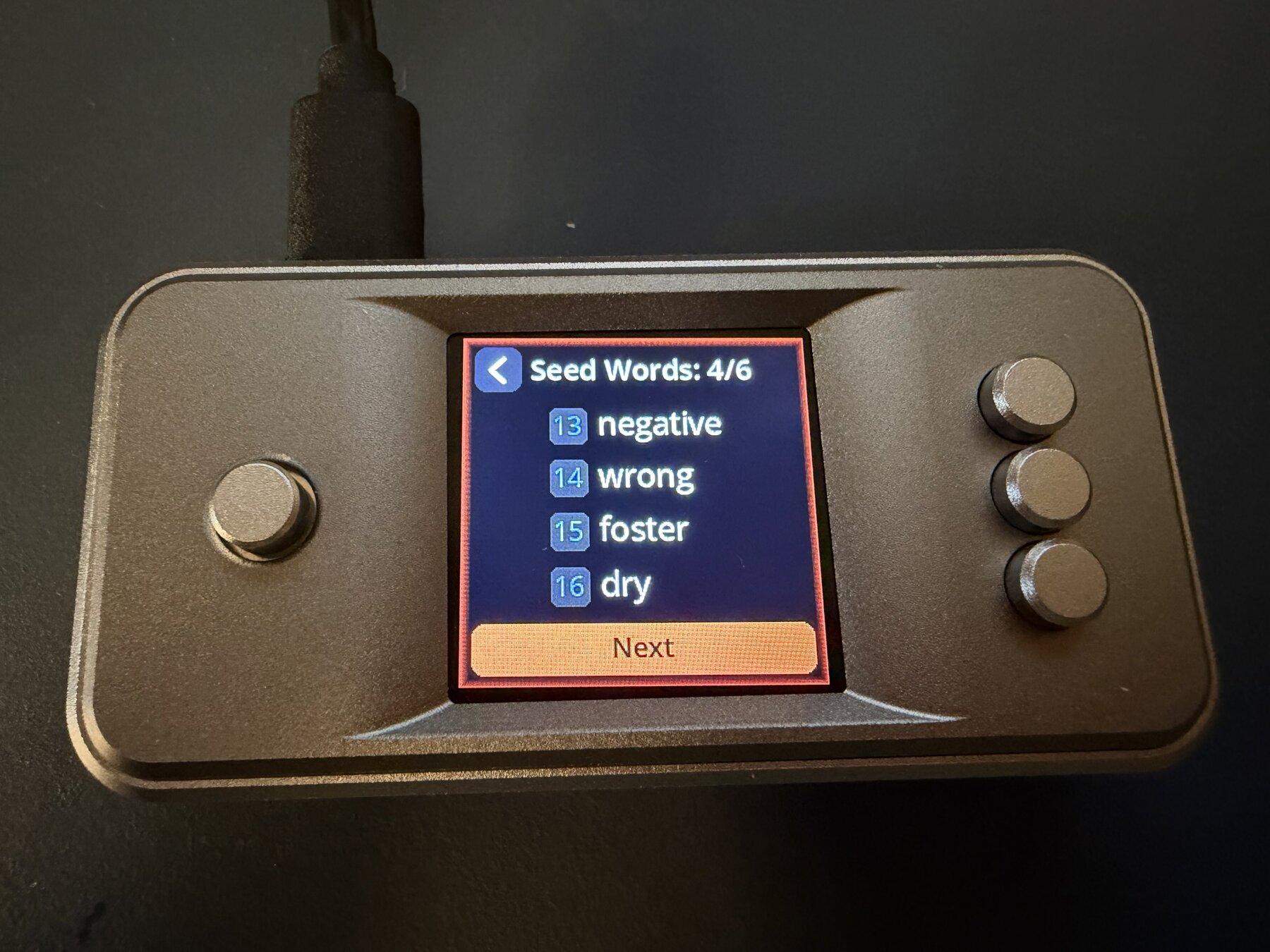
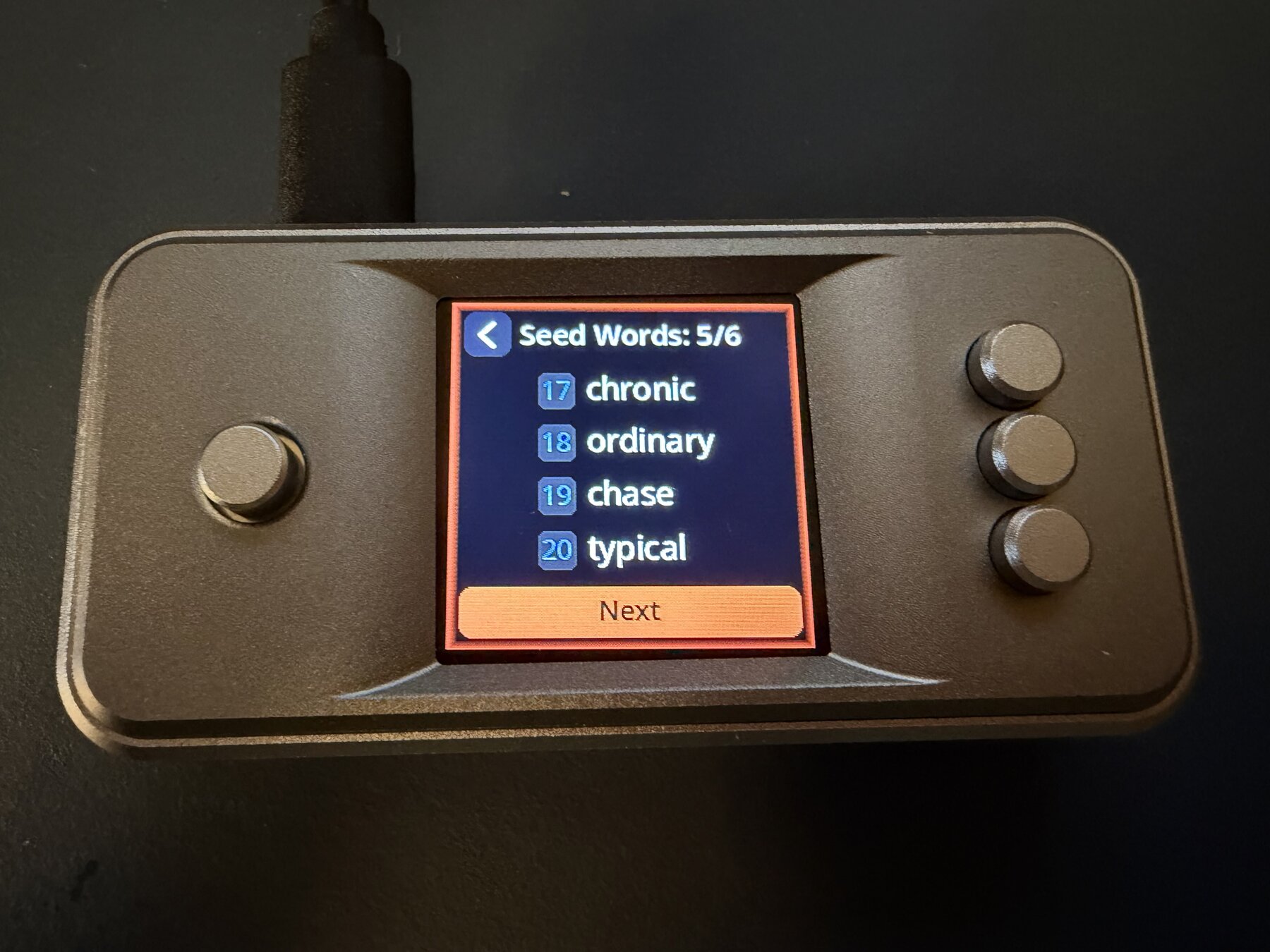
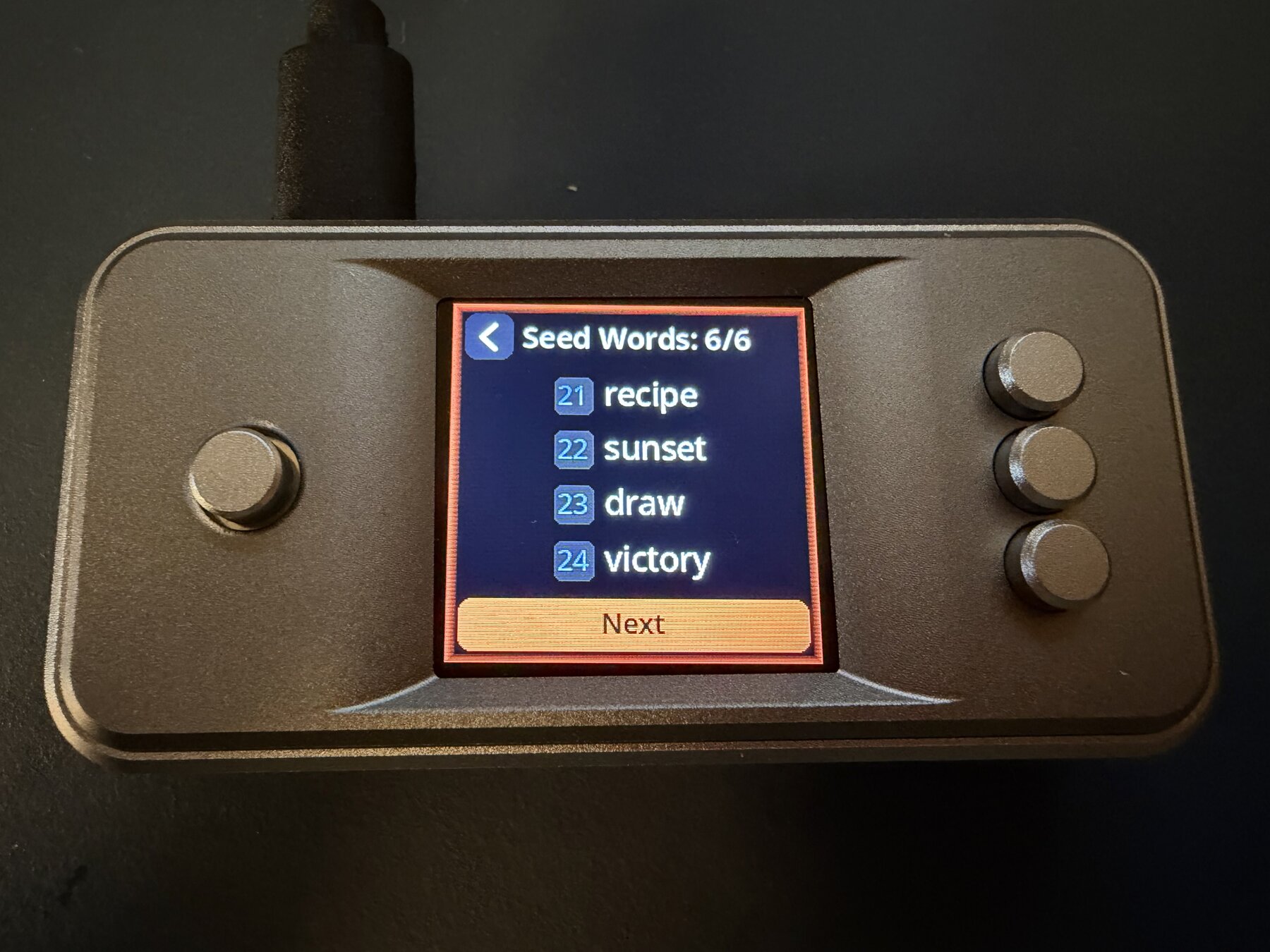
SeedSigner’s generate_mnemonic_from_dice performs the same deterministic calculation. I checked out the release used on the device and ran its host-side tool:
git switch 0.8.7
.venv/bin/python tools/mnemonic.py dice 133363436436436415622614221225242212144161454643266122155666664444633643543353132626522332412313253
It returned the same words. SeedSigner also publishes a dice-seed verification guide.
What this proves—and what it does not
Ian Coleman and SeedSigner independently produce the same 24 words. Both Coldcards produce those words while running affected, pre-hotfix firmware. The historical source explains why: the dedicated dice-only flow hashes the entered rolls without calling the faulty RNG.
This does not prove that a particular historical user used the dice-only menu, rolled a fair die 99 times, entered every roll correctly, or kept the sequence private. Nor does it make a device-generated seed safe. Those are facts no public test can recover afterward.
It proves the narrower claim this article set out to test: the Coldcard RNG bug does not enter the dedicated dice-only calculation, and affected firmware correctly turns this 99-roll sequence into the independently expected 24 words.
If you know that your 24-word seed came from the dedicated dice-only flow with at least 99 fair, private rolls—even if you made it at any point between the bug’s introduction in March 2021 and the fixed firmware releases on July 31, 2026—this RNG bug did not weaken that seed. If you are unsure how your existing seed was generated, the safer choice is to create a new seed using a method you can verify and carefully move your funds to the new wallet rather than continue relying on the old one.